
There’s something deeply satisfying about making things yourself, and homemade condiments like mustard is one of the easiest places to start. With just a handful of pantry staples, you can create a rich, flavorful mustard that’s delicious and healthy. This recipe yields a bold, slightly tangy spread with a rustic, old-fashioned feel—perfect for sandwiches, dressings, and everyday kitchen use.
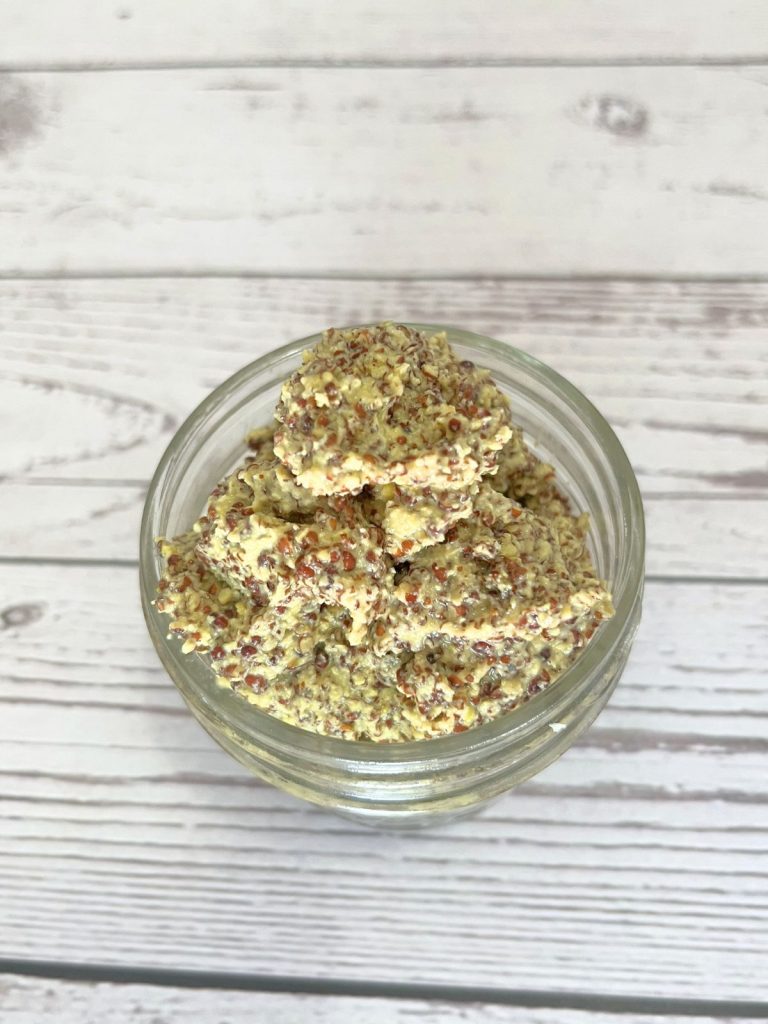
Ingredients
- 1 cup mustard seeds
- Water (for soaking)
- 1 tablespoon apple cider vinegar
- 1/2 teaspoon salt
- 3–4 tablespoons water (for blending)
Equipment
- Bowl or jar for soaking
- Fine mesh strainer
- Blender or small blender cup
- Spoon or spatula
Instructions
Step 1: Soak the Mustard Seeds
Place the mustard seeds in a bowl and cover them with water. Allow them to soak for 12–24 hours. This softens the seeds.
Step 2: Strain the Seeds
After soaking, pour the seeds into a fine mesh strainer and drain well.
Step 3: Blend the Mustard
Transfer the soaked seeds to a blender cup. Add the apple cider vinegar, salt, and 3–4 tablespoons of water. Blend until smooth, stopping as needed to remove the cup and shake the mustard back down toward the blades for even blending. Unless you have a small food processor or planning to make a large batch, you are going to want use a smoothie cup to make this recipe.
I don’t make a large batch because a little mustard goes a long way even if it does last for months in the fridge.
Step 4: Adjust Texture
If needed, add a little more water to reach your desired consistency. Blend again briefly until smooth and spreadable.
Tips for Best Results
- For a milder mustard, blend longer for a smoother texture
- For a more rustic, “stone ground” mustard, pulse lightly instead of fully blending
- Taste and adjust salt or vinegar to suit your preference
Storage
Transfer your homemade mustard to a clean jar with a lid. Store in the refrigerator for up to 4-6 months. The flavor will continue to develop and mellow over time.
Ways to Use Homemade Mustard
- Spread on sandwiches and wraps
- Stir into salad dressings or vinaigrettes
- Serve alongside meats and cheeses
- Add to marinades for extra depth of flavor
Save it for Later…
Leave a Reply