
Learning to sew is one of those timeless skills that feels both practical and deeply satisfying. There’s something special about mending a tear, stitching a simple apron, or creating something useful with your own hands. For the woman who desires a slower, more intentional life, sewing is a skill that supports both frugality and creativity.
If you’ve ever felt intimidated by sewing, you’re not alone. Many beginners assume it’s complicated or requires expensive tools and advanced knowledge. The truth is, sewing can be simple when you start with the basics and build gradually.
This beginner’s guide to sewing will walk you through the foundational tools, skills, and projects you need to start confidently. You don’t need perfection — just a willingness to learn and practice.
Getting Started with Sewing
Sewing is simply the act of joining fabric together with thread. That’s it. At its core, it’s a straightforward skill that becomes more refined with practice.
Many beginners believe they need to master everything at once. You don’t. Start small. Expect uneven stitches, crooked seams, and a few mistakes. That’s how skill-building works. Hand sewing and machine sewing are both valuable, and while a sewing machine speeds things up, you can begin with basic hand stitching if that’s what you have.
Basic Sewing Supplies for Beginners
You do not need an elaborate craft room to begin sewing. A small collection of reliable tools will serve you well. Here are the essential tools you’ll need…
- A sewing machine – More on this later…
- Heavy duty fabric scissors – A good pair will last you for years.
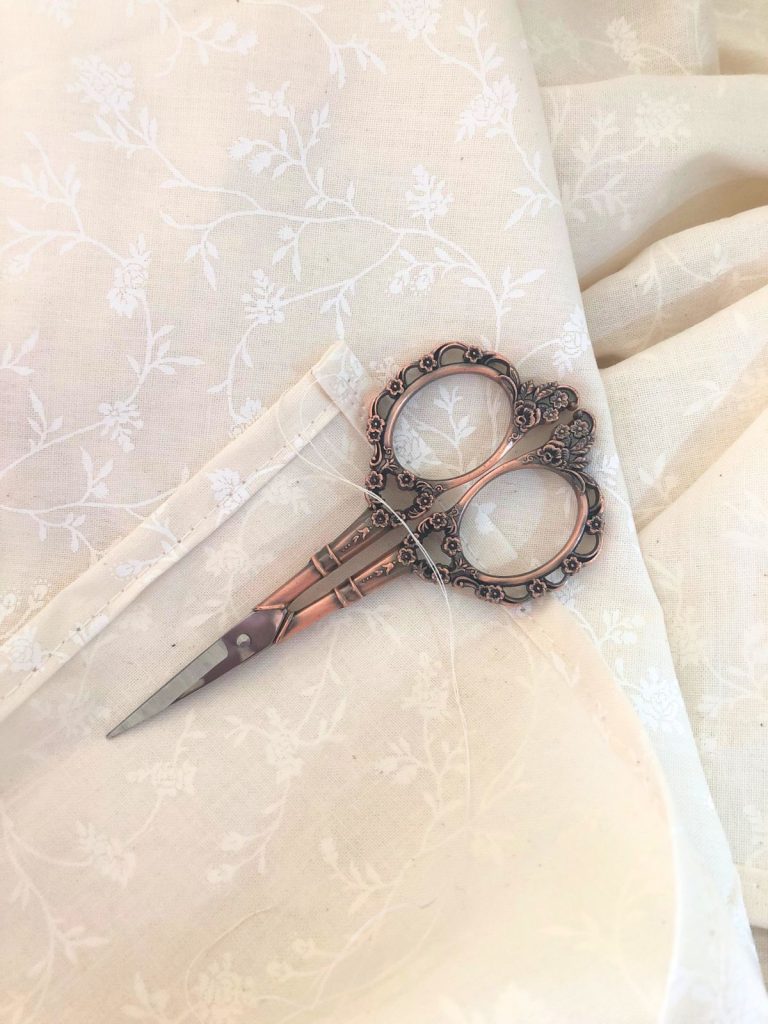
- Small Scissors – I love using these cute embroidery scissors for clipping threads. You could use your big pair, but it’s a little clunky and the ones in the kit or a bit flimsy.
- Sewing Kit – includes all the little things like a thimble, seam ripper, etc for only $6!
As far as thread goes, the kit has some, but I recommend buying better quality thread at Walmart or Hobby Lobby. I recommend buying a coordinating spool of thread with each fabric you buy or project you plan to make. That way you’ll always have what you need on hand.
Nice-to-have extras include a rotary cutter and mat, an iron and ironing board, fabric marking tools (I honestly just use a pencil), and simple storage containers (Like a cute basket from an antique store!) to keep everything organized.
Where to Find a Sewing Machine
If you are just getting started, you do not need the newest or most expensive sewing machine to begin. Many excellent beginner machines can be found at affordable prices if you know where to look. Big box stores, craft stores, and online retailers often carry simple, mechanical machines that are perfect for learning basic stitches without overwhelming features.
Here are a few suggestions…
- Refurbished Machine – I got a heavy duty Singer sewing machine from Walmart.
- Brother’s Machine – This is what I would do if mine goes out. There are a bit cheaper and you’ll get a new machine.
Understanding Fabric
Fabric can feel overwhelming at first, but it becomes manageable once you understand a few basics. Cotton is one of the best fabrics for beginners because it won’t slip around while cutting or stitching.
Woven fabrics (like cotton and linen) hold their shape and are easier to control. Knit fabrics stretch and require a bit more experience. Starting with woven cotton allows you to focus on learning technique without fighting the fabric.
Always prewash your fabric before sewing. This prevents shrinking later and ensures your finished project holds its shape after laundering. Take time to cut carefully and follow the grain of the fabric for best results.
As far as purchasing fabric, you can buy online, but I prefer to see it and feel it in person. Hobby Lobby is my go to for finding fabric. They run sales every other week.
Sewing Machine Basics
Before starting a project, familiarize yourself with your machine. Learn the key parts: the spool pin, bobbin, presser foot, feed dogs, and stitch selector, etc. Watch a few YouTube videos to get the hang of it.
Practice threading your machine and winding a bobbin several times until it feels natural. Most sewing frustrations come from incorrect threading, so slow down and follow your machine’s manual carefully.
Begin by practicing straight stitches on scrap fabric. Learn how to backstitch at the beginning and end of seams to secure them. Adjusting tension may take trial and error, but don’t be discouraged — this is part of learning.
Essential Sewing Skills
Every beginner should master a few core skills. Sewing a straight seam with consistent seam allowance is foundational. Use the guide markings on your machine’s needle plate to help keep lines even.
Pressing seams with an iron after stitching makes a dramatic difference in the final result. However, pressing is optional despite what most people will say. If I had to iron every project I did, I wouldn’t sew.
Learn to finish raw edges with a zigzag stitch to prevent fraying. Practice simple hemming techniques and basic hand stitches like the running stitch and whip stitch. These skills will allow you to mend clothing and complete simple household projects.
Your First Simple Sewing Projects
Start with small, practical projects that build confidence. Here are a few to choose from…
The goal of your first projects is not perfection — it’s progress. Each finished piece will strengthen your skills and grow your confidence.
Final Thoughts
Sewing is not about creating flawless garments on your first try. It’s about building a skill slowly and faithfully, one seam at a time. The more you practice, the more natural it becomes.
As a homemaker, sewing supports frugal living, creativity, and self-sufficiency. You don’t have to master everything today. Start with simple tools, basic fabric, and a small project. With patience and practice, you’ll be surprised at what your hands can create.
Leave a Reply